Why Pinterest for Service Providers Outlasts Every Other Platform
QUICK ANSWER
Pinterest works like a visual search engine, not a social feed. The average Pinterest pin stays visible for four months or longer. For coaches, consultants, and service providers, a correctly set up Pinterest account builds steady, compounding traffic without the daily posting requirement of social media.
If you are a coach, consultant, or service provider and you are spending most of your marketing energy on Instagram or LinkedIn, this is worth reading.
Not because those platforms are wrong. They work for a lot of people. But most service providers have never seriously considered a platform that keeps working long after they have stopped posting. One that sends traffic to a website months or even years after the content was created.
That platform is Pinterest.
Most people write it off as a place for recipes and home decor. I quickly learned that this assumption costs service providers a significant amount of steady, compounding traffic.
In this post, I am going to explain why Pinterest works differently from every other platform, what most service provider accounts get wrong, and what a correctly set up account looks like from the inside.
By the end, you will have a clear picture of whether Pinterest belongs in your marketing and what it would take to make it work.

The Shelf Life Problem Nobody Talks About
Here is a number that tends to stop people. The average Instagram post has a content lifespan of 24 to 48 hours. After that, the algorithm has moved on and your post is buried under everything published since.
LinkedIn is similar. A post might stay active for three to five days if it gets strong early engagement, but the window closes quickly. Every piece of content you publish on those platforms starts losing reach almost immediately.
Pinterest is different in a fundamental way. The average Pinterest pin has a lifespan of four months. Some pins drive traffic for considerably longer. There are accounts with pins from two and three years ago that still appear in search results and still send people to a website every week.
This is not a quirk of the platform. It is how Pinterest was designed to work.

Why Older Content Keeps Winning on Pinterest
On most social platforms, recency is the deciding factor. The newest content wins. Pinterest works differently. A well-optimised pin from two years ago will outperform a pin from last week that was not set up for search.
This changes how you think about content creation entirely. Instagram requires you to keep feeding the machine. Pinterest lets you build an asset instead. One pin can keep sending people to your website long after you have moved on to creating other things.
For service providers who want visibility without the daily posting requirement, that is a meaningful difference.
Pinterest Is a Search Engine, Not a Social Feed
Most people treat Pinterest like Instagram with a different layout. That is the single most common reason Pinterest accounts for service providers do not perform.
Pinterest is not a social media platform. It is a visual search engine. People do not open it to see what others are doing. They open it to find something specific. A business strategy, a solution to a problem they are working through, a step-by-step process they want to understand.
That intent matters more than most people realise when deciding where to invest their marketing time.

What Intent-Driven Traffic Actually Means
When someone finds your content on Pinterest, they were already searching for something related to what you do. They arrived with a problem in mind. Your content showed up as a potential answer.
Compare that to social media, where your content is surfaced to people who may or may not be in a problem-solving mindset when they scroll past it. A person casually scrolling Instagram at 10pm is in a very different headspace from someone actively searching for business help on a Tuesday afternoon.
The quality of that attention is different. The likelihood that they take a next step is different. That difference is what makes Pinterest traffic worth building.
Why Most Pinterest Accounts for Service Providers Do Not Work
When I audit Pinterest accounts for coaches and consultants, I see the same patterns repeatedly.
The Profile Setup That Works Against You
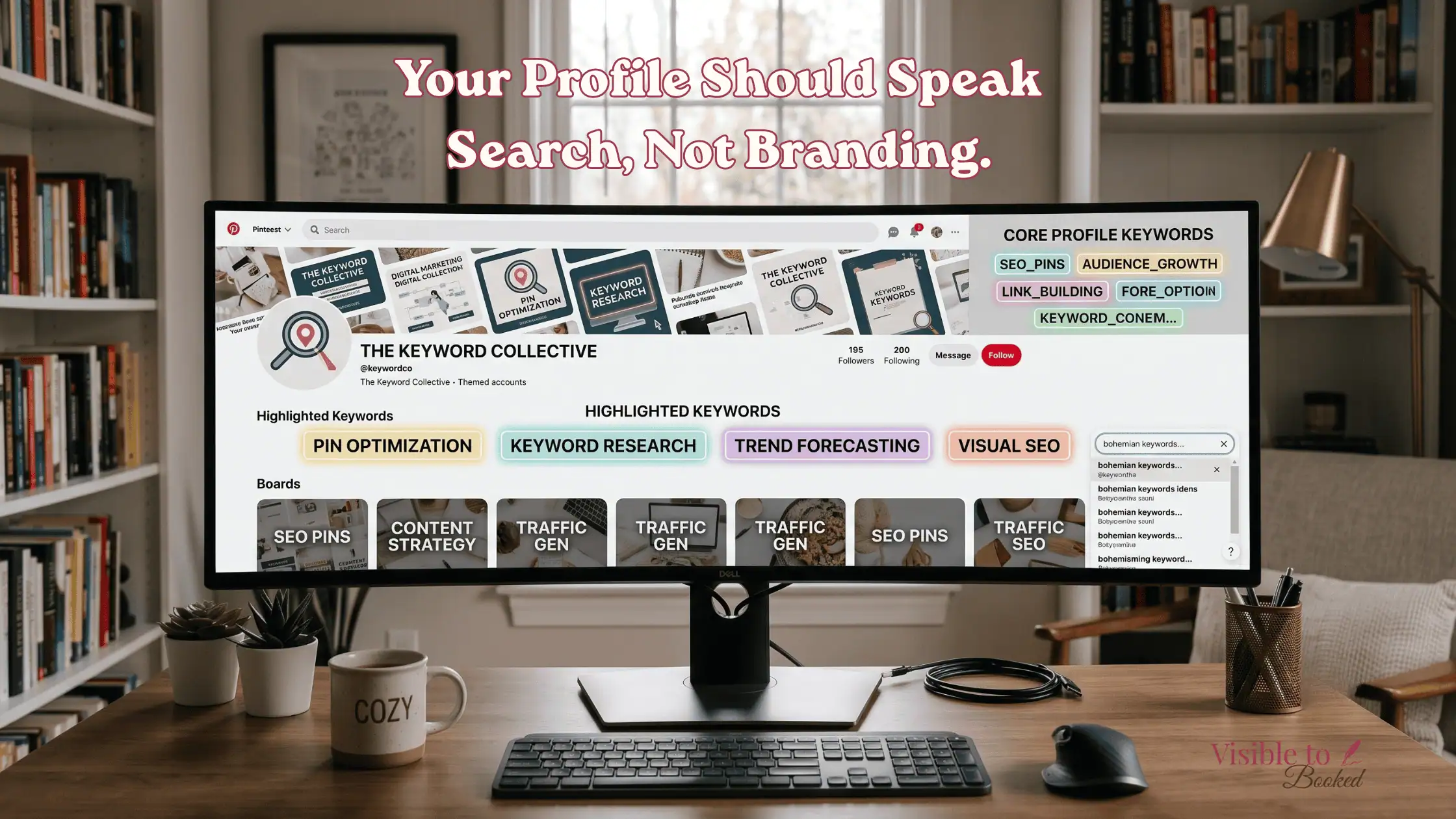
Most profiles are not set up for search. Display names and bios are written to sound clear to a human reader, but they do not include the search terms a potential client would actually type. Without those terms, Pinterest does not know who to surface the content to.
Board structure is the second issue. Most boards are organised around what makes sense to the business owner, not around what someone searching for help would type into a search bar. Boards built around internal categories rather than actual search queries will not appear when the right people are looking.
Pins that lead nowhere complete the pattern. Traffic arrives and there is no clear next step: no opt-in, no lead magnet, no invitation for the visitor to take action. A visitor shows up, looks around, and leaves without ever connecting with the business.
None of these problems are complicated to fix. They require knowing what the correct setup looks like, which most service providers never learned because they built their account using general advice rather than a structured approach.

What a Properly Set Up Pinterest Account Includes
A Pinterest account that drives consistent traffic to a service provider’s business typically has these elements in place from the start.
The Profile Foundation
A keyword-optimised display name and bio. These fields include specific search terms that an ideal client would type, not just a business name or a general description of what the owner does. Pinterest reads these fields as part of how it decides who to show the content to.
Ten to fifteen boards with SEO-driven titles and descriptions. Each board name should reflect an actual search query. “Marketing Tips” is too broad. “Pinterest marketing tips for coaches” or “how to get clients from Pinterest” reflects what someone would genuinely type. Board descriptions need those keywords placed naturally throughout.

Pin Strategy and Posting Rhythm
Three to five pins per piece of content. Most accounts publish one pin per blog post or video. A well-built account creates multiple pin designs pointing to the same destination, each with a different visual angle, headline, and keyword focus. More entry points into the same content means more opportunities to appear in search.
Ten to twenty pins per week published on a consistent schedule. Pinterest rewards accounts that post regularly. Consistent matters more than constant. A predictable rhythm the algorithm can rely on matters more than daily posting.
A clear funnel destination for every pin. Every pin points somewhere useful. That destination moves a visitor toward an opt-in or a discovery call. Pinterest is a traffic driver. What happens after the click determines whether any of that traffic converts.
Q: Can Pinterest work for a service provider if I do not have a blog?
A: Yes. Pinterest can drive traffic to a landing page, a lead magnet page, a podcast episode, or a services page. A blog helps because it gives you more content to pin and more entry points into your site. It is not a requirement. The more important factor is that wherever your pin leads, there is a clear next step waiting for the visitor.
How Long Does Pinterest Actually Take to Work
This is the honest answer.
Pinterest is not a fast channel. Accounts that are set up correctly typically start seeing consistent organic traffic within 60 to 90 days. Some accounts take three to six months to build meaningful traction.
The timeline depends on the niche, the level of keyword competition, how much content is being pinned, and how solid the foundation is from the beginning. Competitive niches take longer. More specific topics with less competition can move faster.
Setting Realistic Expectations
If you need leads this week, Pinterest is not the right tool for that. It is not designed for urgency. But if you are building a business for the long term and you want a traffic source that does not require constant effort to keep working, the setup investment is worth it.
The accounts that perform well on Pinterest are not the accounts that post the most. They are the accounts that were built correctly from the beginning and maintained consistently over time.
Q: How many pins do I actually need to post each week?
A: A practical starting point for most service providers is ten to fifteen pins per week. This does not mean creating ten new pieces of content every week. It means creating multiple pin designs that point to the same piece of content, then scheduling them across the week. Tools like Tailwind make this manageable. The goal is a consistent rhythm that Pinterest’s algorithm can recognise over time, not a daily scramble to create new material.
What I Have Learned From Working With Service Provider Accounts
I have worked with and audited Pinterest accounts for coaches, consultants, and service providers across different niches. The accounts that drive consistent traffic share a few things in common.
They were built with search intent in mind from the start. The profile, board names, and pin descriptions all use the language a potential client would type, not the language the business owner uses to describe their own work. That difference is small in effort and significant in results.
Traffic from these accounts lands somewhere useful. There is always a clear next step for the visitor. An opt-in, a lead magnet, a discovery call page. Without that destination in place, Pinterest traffic does not convert.
Setup Quality Beats Posting Volume
I quickly learned that the setup matters more than the posting volume. A well-built account posting ten pins a week will consistently outperform a poorly set up account posting thirty pins a week. Getting the foundation right first is what makes everything else work.
Ready to Build Steady Pinterest Visibility?
If you are ready to understand what a steady, simple Pinterest presence could look like for your business, a good place to start is the Predictable Client Flow Starter Map.
The map walks you through how to simplify your offer, attract the right people from Pinterest, and build a simple email system that turns traffic into leads.
Free and practical, it is built for service providers who want visibility that works without the daily social media requirement.
Get the Predictable Client Flow Starter Map at patjendigital.biz
Frequently Asked Questions
Key Takeaways
- • The average Instagram post loses visibility in 24 to 48 hours. The average Pinterest pin stays active for four months or more.
- • Pinterest users are searching for specific solutions, not passively scrolling making the traffic more focused and more likely to convert.
- • Most Pinterest accounts for service providers underperform because the profile, boards, and pins are not set up for search.
- • A properly set up Pinterest account includes keyword-optimised boards, multiple pins per piece of content, and a clear funnel destination.
- • Pinterest takes 60 to 90 days to show consistent results, but the traffic compounds over time instead of resetting every day.
Author Bio- Hi I’m Patricia
A Pinterest strategist based in Kingston, Jamaica. After more than three decades building and managing businesses in banking, customs brokerage, and graphic design and print, I moved online and found Pinterest. I quickly saw how it worked differently from social media: content that gets found over time, not content that disappears the next day. Through Visible to Booked, I help women in service-based businesses build a steady Pinterest presence that brings in consistent visibility, traffic, and leads without the pressure of constant social media performance.
Website: patjendigital.biz

Get the Predictable Client Flow Starter Map!
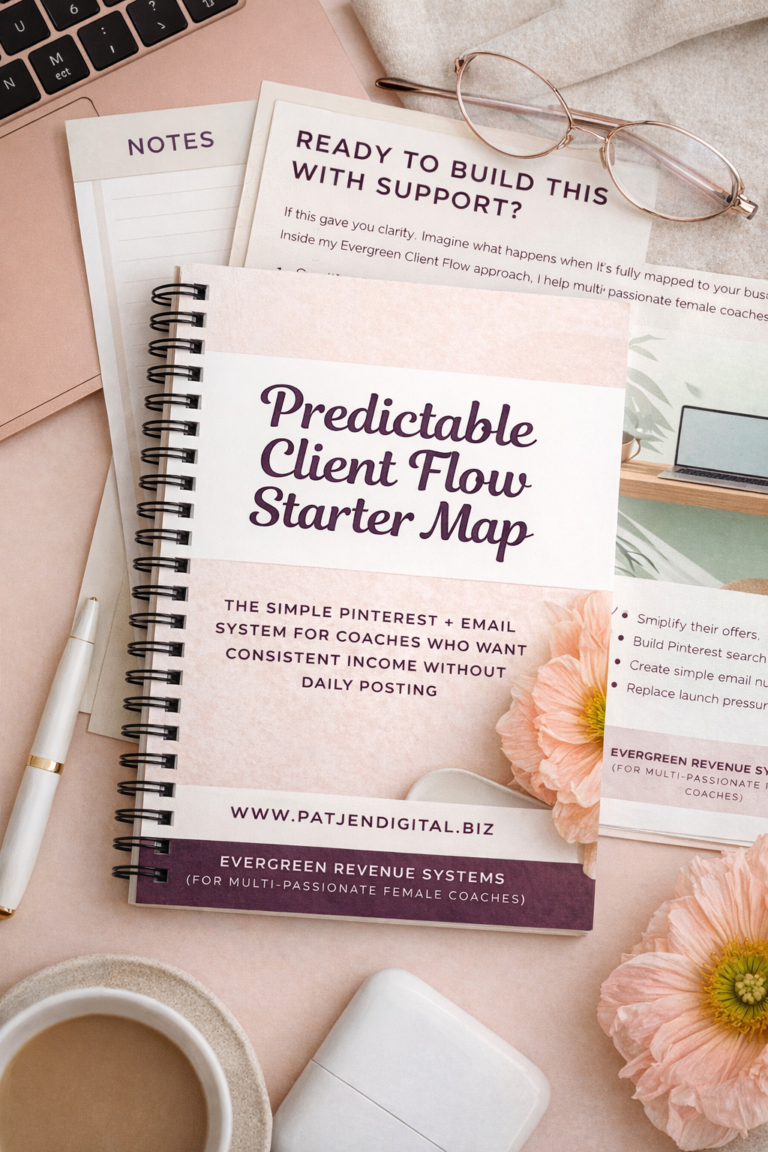
- Inside the Predictable Client Flow Starter Map, I walk you through the simple framework I use to help coaches move from inconsistent visibility to steady client flow using Pinterest and email.
- Download the guide and start building your client attraction system today.

One Comment